Wien (OTS) - Nach nur vier Monaten hat Anna Netrebko in Österreich mit Ihrer CD "Anna - Best of Anna Netrebko" Platinstatus (mehr als 20.000 verkaufte Alben) erreicht. Der Opernstar war am Samstag Gast bei "Wetten dass..." in Salzburg und konnte von Thomas Gottschalk persönlich den Platin-Award für diese außergewöhnliche Erfolgsstory entgegennehmen. Vor dem ausverkauften Auditorium der Salzburgarena und vor einem Millionenpublikum an den Bildschirmen zu Hause, präsentierte die Opern-Diva ihr neuestes Album "In The Still Of Night", welches erst kürzlich bei der Deutschen Grammophon veröffentlicht wurde. Anna Netrebko beweist einmal mehr, dass sie zu den ganz Großen des Musikbusiness gehört und die Herzen vieler im Sturm erobert.
die Opernwelt jubelt: Auf welchen Bühnen Rolando Villazón in den kommenden Monaten auftreten wird, hat der mexikanische Startenor jüngst mitgeteilt. Was er noch nicht verraten hat: Im März 2010 wird Villazón eine neue CD einspielen. Die Information dazu steht bescheiden zurückhaltend auf der Internetseite der Bolivar Soloists: „2010 folgen eine CD-Produktion und eine Tournee mit dem mexikanischen Tenor Rolando Villazón für die Deutsche Grammophon.“
Dabei handelt es sich um ein Album mit mexikanischen Liedern, wie Efrain Oscher, Leiter des Kammermusikensembles Bolivar Soloists, am Rande eines Konzertes der lateinamerikanischen Musiker in Berlin verriet. Villazón wollte schon seit langem eine CD mit mexikanischer Musik aufnehmen: „Das ist die Musik, mit der ich aufgewachsen bin, die mich geprägt hat. Ich habe große Lust diese Lieder zu singen“, sagte er in einem Interview 2008. Auf die Frage: „Wann?“, antwortete Villazón: „Schon sehr bald.“ Aber dann kam die Operation an einer Stimmbandzyste dazwischen.
Nun ist Villazón zurück und die Termine stehen fest. Efrain Oscher: „Villazón hatte seine Plattenfirma auf die Suche geschickt, eine Begleitband zu finden. Er wollte kein großes Orchester und keine Folkloremusiker.“ Die Solisten, die sich nach dem venezolanischen Freiheitshelden Simón Bolívar benannt haben, spielen in klassischen Orchestern und haben (fast) alle lateinamerikanische Musik im Blut. Oscher, in Uruguay geboren und in Venezuela aufgewachsen, lebt in Bremen. Er ist ein hervorragender Flötist und Komponist, wie er in Berlin im Ibero-Amerikanischen Institut mit der Uraufführung seines Stücks „Alexander von Humboldt und die Klänge der venezolanischen Landschaft“ bewies,
Rolando Villazón kündigt auf seiner Website für Juni eine Konzertreihe in Mexiko an, gewissermaßen die Generalprobe vor kundigem Publikum, bevor im Herbst die Deutschland- und Europatournee folgen soll.
Click here to watch the Deutsche Grammophon's side for Rolando's Händel album "Arias". There you can watch some videos, listen to 3 tracks out of "Arias", look at some pictures, etc. Very beautiful, interessting and lovely made site =) And now it's finally clear which versions of the CD will be released:
Click here to watch the Deutsche Grammophon's side for Anna's and Elina's recording of I Capuleti e i Montecchi. Very nice pictures there !
Anna will give a concert in Copenhagen (18th September), in Oslo (21rd September) and in Stockholm (24th September) with the Danish Radio Orchestra conducted by Emmanuel Villaume. The concert in Copenhagen was already sold out after 14 minutes !!! Unbelievable...
Hope that I didn't forgot to wright anything. School is really getting on my nerves at the moment, I don't find the time to work at the blog =/ There are still soo many things I have to work on here...better stop thinking about, otherwise I will get crazy..."il fantasma, il fantasma..." ; )
This is the cover of Rolando's new album called "Arias". Like it is announced at his Deutsche Grammophon site, a limited deluxe edition of the CD including a DVD will be available, too. Well, what do you think about the cover, do you like it ? ; )
Rolando's new Händel album will be released on 20th March 2009 at Deutsche Grammophon. The cover is not available already, but here's the track list:
1. Aria: Ciel e terra armi di sdegno 2. Accompagnato: Fatto inferno 3. Aria: Pastorello d'un povero armento 4. Accompagnato: Frondi tenere 5. Arioso: Ombra mai fù 6. Aria: Più che penso alle fiamme del core 7. Aria: Crude furie degl' orridi 8. Aria: Scherza infida in grembo al drudo 9. Aria: Dopo notte, atra e funesta 10. Rec.: Oh, perme lieto - Accompagnato e Rec.: Fremi, minaccia 11. Arioso: Figlia mia 12. Accompagnato: Tu, spietato, il vedrai 13. Aria: "Così la tortorella" (S. Giovanni) 14. Aria: "Caro Figlio!" (S. Giovanni)
I'm looking really forward to the release of his new album ! =)
2 following releases:
09th January: DVD and Blu-ray of Roméo et Juliette with Rolando and Nino Machaidze at the Salzburger Festspiele in August 2008
20th February: CD of I Capuleti e I Montecchi with Anna and Elina Garanca from a concertant performance at the Konzerthaus Vienna in April 2008
The complete recording of Anna's concertant performance of I Capuleti e I Montecchi with Elina Garanca as Roméo at the Konzerthaus Vienna in April this year will be released at Deutsche Grammophon in February 2009 on CD.
I'm looking really forward to this CD, can't wait to buy it =)
Today release finally Anna's longish anticipated new solo Album "Souvenirs" at Deutsche Grammophon. A limited deluxe edition with postcards, a placard and a bonus DVD is available. Just listen to the album and enjoy it ! =)
Emmerich Kálmán: Heia, in den Bergen The eponymous "csárdás princess" of Kálmán's ever-popular 1915 operetta Die Csárdásfürstin (in English usually, though imprecisely, called The Gypsy Princess) is Sylva Varescu, a Hungarian cabaret singer who becomes engaged to a prince. Sylva's dazzling opening number, sung on the stage of her chic Budapest nightclub, mixes Magyar exoticism with Viennese charm.
Richard Heuberger: Im chambre séparée In the operetta Der Opernball, Heuberger's 1898 masterpiece, the housemaid Hortense disguises herself as a masked lady to attend a glamorous Parisian opera ball. In this seductive duet, she invites the attractive young naval cadet Henri to join her in a private room for a "tête à tête".
Franz Lehár: Meine Lippen, Sie küssen so heiss In Lehár's bittersweet 1934 operetta Giuditta, the beautiful heroine abandons her husband to be with Octavio, an army captain. When he leaves her to pursue his military career, she becomes a night-club performer in North Africa - and a rather successful one, it would seem from this, the operetta's hit number.
Gustave Charpentier: Depuis le jour The heroine of Charpentier's Louise is a Parisian dressmaker who has fallen in love with the bohemian poet Julien, but their relationship scandalizes her narrow-minded parents. In this, the opera's most famous aria, Louise tells her lover that her life has become one of indescribable happiness since she met him. At the end of the opera she abandons her parents to live with him - a surprisingly modern ending for an opera written in the 1890s.
Jacques Offenbach: Belle nuit, ô nuit d'amour (Barcarolle) In Offenbach's 1881 opera Les contes d'Hoffmann, we witness the poet E.T.A. Hoffmann's doomed love-affairs in three cities. This famous duet, sung by the courtesan Giulietta and Hoffmann's friend Nicklausse (a mezzo role), is set on a Venetian lagoon. Offenbach originally composed it for his ill-fated romantic opera Die Rheinnixen, but it found a happier home in this, his last and greatest work.
Richard Strauss: Cäcilie Strauss presented this ravishing song to the soprano Pauline de Ahna, his bride-to-be, on the day before their wedding in 1894. The text was the poet Heinrich Hart's tribute to his own wife, Cäcilie. Although Strauss and his spouse were opposites in temperament - he was phlegmatic and de Ahna fiery - this ecstatic piece proved prophetic of their long union.
Edvard Grieg: Solveig's song Solveig is the patient and long-suffering love of Peer Gynt's life, but he abandons her to seek adventure in the world. Solveig nevertheless sings of her love for Peer in this haunting lullaby, composed by Grieg for the first performance of Ibsen's play in 1876.
André Messager: Lorsque je n'étais qu'une enfant In Messanger's 1907 opera Fortunio - a great success at Pari's Opéra-Comique - Jacqueline is using the naive young Fortunio as a decoy to draw attention from her real love affair with a soldier. When Fortunio reveals how deeply he loves her, she rejects him.
Antonín Dvorák: Kdyz mne stará matka Dvorák composed a cycle of Gypsy Melodies to texts by the poet Adolf Heyduk in 1880, and this sweetly sentimental ballad from the set has become his best-known song, famous in English under the title Songs My Mother Taught Me. He made this Czech version of the song soon after setting the original German text.
Richard Strauss: Wiegenlied - Lullaby Strauss composed this rapt, haunting lullaby in 1899 to a poem by Richard Dehmel, and dedicated it to his friend Mme. Marie Rösche (née Ritter). The accompaniment was originally for piano, but Strauss himself later adapted it for orchestra.
Nikolai Rimsky-Korsakov: Ne veter, veya s visoti Not the wind, blowing from the heights This charming song, comparing the effect of the wind on the poet's body to the effect that his beloved has on his soul, was composed in 1897 to a text by Count Aleksei Tolstoy (a relation of the novelist Leo Tolstoy). This, and the following song, are both orchestrated here for the first time.
Nikolai Rimsky-Karsakov: Plenivshis' rozoy, solovey Eslaved by the rose, the nightingale Rimsky-Korsakov wrote his Oriental romance in 1866, and dedicated it to Malvina, the wife of his friend and fellow-composer César Cui. The words are from an 1831 poem by Aleksei Kol'tsov, written in imitation of the style of the literary giant Aleksandr Pushkin. With its sinuous faux-oriental melody, it reflects the fascination with the eastern reaches of the empire which pervaded Russian culture at the time.
Schlof sche, mein Vögele - Sleep well, my little bird Very little is known about the origins of this traditional Yiddish lullaby, but its sad and tender beauty has ensured that it touches hearts whenever it is performed.
Andrew Lloyd Webber: Pie Jesu Lloyd Webber's 1985 Requiem was written as a response to the harrowing plight of Cambodian orphans in the early 1980s, as well as to the death of his father in 1982. It was an immediate success, and later won a Grammy. The Pie Jesu, a duet for soprano and boy treble, also rose surprisingly high in the UK pop charts.
Reynaldo Hahn: L'énamourée - The loved one The Venezuelan-born Hahn composed his first song aged eight and entered the Paris Conservatoire at ten. This exquisite and pensive melody dates from 1892, when he was still only 17.
Carlos Guastavino: La rosa y el sauce Guastavino's reputation is based almost entirely on his songs. Luscious, tonal and influenced by folk music, they have been enormously popular in the composers's native Argentina since the 1940s - La rosa y el sauce (The Rose and the Willow) from 1942 is one of the best known. In recent decades their appeal has been spreading around the rest of the world.
Gerónimo Giménez: La tarántula é un bicho mú malo Giménez's zarzuela (a form of Spanish operetta with a high proportion of dialogue) La tempranica (The Headstrong Girl) was a huge hit at its premiere in Madrid in 1900. It tells the story of María, a young gypsy who falls in love with a nobleman but who comes to realize that their love is impossible. La tarántula, a lively zapateado (a Spanish dance in triple time), is performed as a diversion by María's brother Grabié, a trouser role.
Luigi Arditi: Il bacio The italian composer, violinist and the conductor Luigi Arditi toured the world before deciding to settle down in London in his 30s. It was there that he wrote this, his most popular song, in 1860. Il bacio (The Kiss) has been a favourite ever since among singers possessing a good coloratura technique.
The following two videos are about the recording of "Souvenirs". The first video shows the recording of "Belle nuit, ô nuit d'amour" (Barcarolle) together with latvian mezzo-soprano Elina Garanca and the second video shows the recording of "Heia, in den Bergen".
If you click here you can watch another video about the recording. There are short interviews with Anna, Emmanuel Villaume, Elina Garanca, Andrew Swait and Anna's vocal couch Elena Matusovskaya. Furthermore you can watch parts of the recording of "Pie Jesu", "Barcarolle" and "Heia, in den Bergen".
(I know that I actually don't have any rights on the pictures, but please don't post them anywhere ! I really needed a long time to create them and they are made with all my love for them both, so please respect this. You can of course save them for your personal gallery if you want. Thanks)
Anna
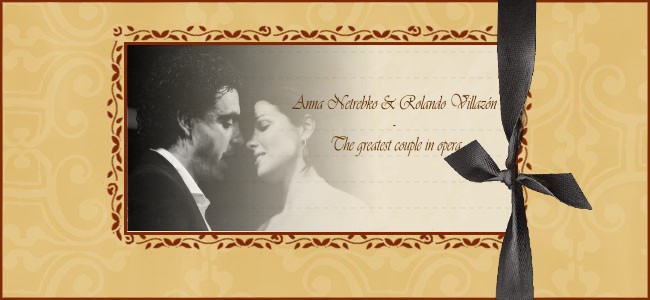
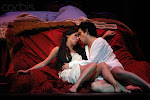
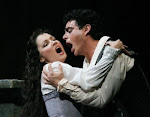
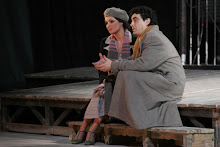
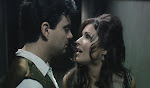
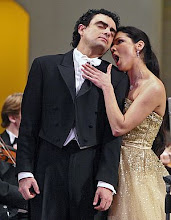
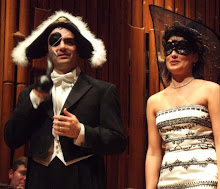
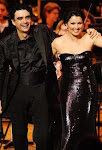
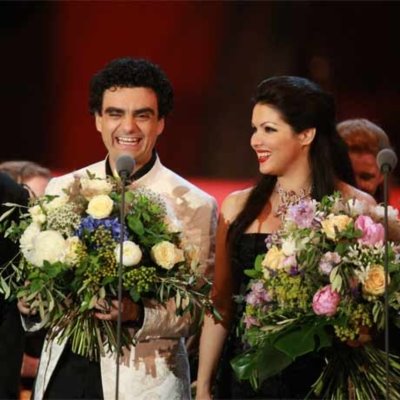
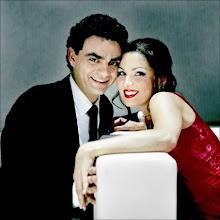
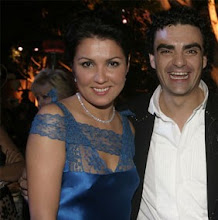
Anna Netrebko & Rolando Villazón - World's greatest opera couple
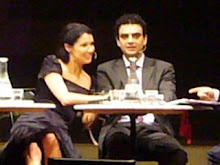
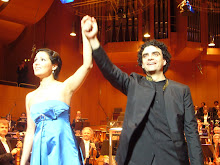
Anna Netrebko & Rolando Villazón - Welcome back on stage "Traumpaar"
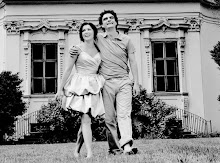
Anna and Rolando are my absolutely favorite couple in opera ! There's such a special chemistry between them. I decided to make a blog devoted to Anna AND Rolando and not even one about Anna OR Rolando. I hope you will like my blog. Constructional animadversion is desired and I am thankful for all suggestions !


.jpg)


.jpg)
+35.jpg)
+36.jpg)
+37.jpg)
+38.jpg)


.jpg)


.jpg)

.jpg)


.jpg)


.png)


.jpg)
.jpg)
.jpg)
.jpg)
.jpg)
.jpg)
.jpg)


.jpg)

.jpg)
.jpg)




.jpg)
.jpg)

.bmp)
.jpg)

.jpg)


+2.jpg)
.jpg)


