Posts mit dem Label La Traviata werden angezeigt. Alle Posts anzeigen

Donnerstag, 22. Oktober 2009

Vor Anna hat man ja wirklich keine Ruhe...

...nicht mal am Donnerstag Abend kann man in Ruhe "Donna Leon" (ich liiiebe die Bücher und Filme) anschauen will ;)) Sie kam "im Radio"-> Libiamo, aber leider nicht mit Rolando von 2005, konnte in der Kürze der Zeit leider nicht raushören wer denn Alfredo war.

Übrigens wen es interessiert: Donna Leon ist eine große Opernliebhaberin ! Brunettis 1. Fall heißt "Venezianisches Finale" und handelt um einen Dirginten der während der Pause einer Traviata Aufführung tot in seiner Garderobe aufgefunden wird. Ganz toller Krimi ! =)

Mittwoch, 1. Juli 2009

Anna's Traviata San Francisco 28th June 2009 - Review

On a very noisy and crowed day in San Francisco on the occasion of the "Gay
Pride Celebration" there was a gem of a La Traviata production taking place in
the War Memorial Opera House that was novel and breathtaking. During a
pre-concert lecture, it was stressed that in Verdi, the music is the
underpinning only to support the singer. Several selections from an old
production with Monserrat Cabale and Domingo were played to introduce the
audience to this early gem by Verdi. The lecturer pointed out how unique
Netrebko is in her ability to paint her voice to express the inner feelings and
mood of Violetta and how this changes throughout the opera. While the cast with
Dwayne Croft (Georgio Germont) was superb, Charles Castronova as Alfredo Germont
(improved as production progressed) and Donald Runnicles (last performance of
his tenure) was noble, the evening belonged to Ms. Netrebko. From the opening
moment of her arrival in a lavish 1920's style car, it was clear that she not
only ruled the stage, but loved every moment of this production. From the
opening scene dressed in a white sequined gown, followed by a black evening
dress at the gambling parlor to her final dying scene in negligee, she
epitomized elegance, grace, and astonishing beauty. Her voice has become fuller
with ample power in all octaves. She has incredible dynamic range from a
poignant whisper to full exclamatory willpower, with joy and angst. At times,
she had to hold back somewhat so as not to over sing Alfredo. The highlight of
the opera was her acting ability in being able to portray a dying courtesan who
does not want to leave her lover. Dying of consumption, she just became limp on
several occasions that were most believable. Her cough similar to La Boheme was
not only believable, but your heart skipped a beat with the rising tension. You
could hear a pin drop as you heard her dying moments collapsing on a couch to
the familiar high violin accompaniment. My only concerns that need to be
expressed were the amplification of the orchestra which was totally unnecessary,
but the incessant delivery of amplified violin section attributed to poor
microphone placement was obtrusive and annoying. At least on one occasion Mr.
Runnicles overpowered the singers in his zealous enthusiasm.

On one occasion Ms. Netrebko transposed a high note with little detraction.
She displayed ample power, coloratura bravura with a marvelous tone. Having
recently heard Natalie Dessay sing Sempre Libera at the Met Gala, one was
impressed by the legato nature of Netrebko's portray in contrast to Dessay's
intentional staccato, fragmented phrasing interpretation. Having also seen
photos of Rene Fleming in her current Violetta at the ROH, one can only marvel
at Netrebko's resilience, endurance and commitment to bel canto opera. She is
made for this type of role. From the moment of the curtain falling on the final
scene, you then witnessed the incredible transformation of Netrebko joyously
waving to the crowd with her signature smile and hand-waving to her kiss for the
conductor. Since this was San Francisco, a town near to her heart since had her
American debut in the War Memorial Opera house, it was a joyous reunion. There
were banners on street poles, tote bags declaring we love Anna to photos in the
cafeteria of her debut in Ruslan and Ludmila (Glinka).


Perhaps was the greatest surprise of the day was her autograph signing for
approximately 300 people. Anna came out with colorful beads used in New
Orleans in white Bermuda shorts and stiletto heels. Everyone was given the
opportunity to customize their autographs by filling out a note for Anna. She
sat there sipping Champagne with Balalaika music and a small Russian group
providing mood setting music for these accolades. My wife and I were
particularly struck, not only by her beauty, but graciousness in her
conversation. My wife Paula was so nervous she could not snap a photo and Anna
told her not to be nervous at all. Paula said that she hoped to see Villazón's
return (also acknowledged by Netrebko) and I told her how much I loved her
recording of I Capulets and Montecchi by Bellini. She agreed that this was the
most beautiful score. She was quite surprised to hear that we had traveled to
Abu Dhabi to hear her in concert with Elina Garanca and Erwin Schrott.
The mezzanine gift shop was mobbed in anticipation of the CD autograph signing following the performance. We met many wonderful people who enjoyed the performance and some can with nearly every CD and DVD for autographs. How Ms. Netrebko can sing her heart out, sign autographs, be a full time mother and travel the world defies understanding. She is clearly raising the bar as a model of modern day opera and has clearly expanded an ample
repertoire. Her career with many counterparts, e.g. Garanca, Villazon, Alagna,
Beczala, Castronova, Cutler and others seems to be a joyous tribute to a young
girl growing up in Krasnodar of modest means. This is truly the story of modern
day princess.

With warm regards,
Howard


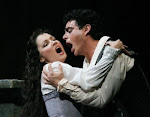
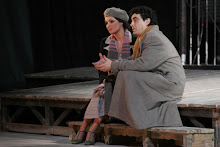
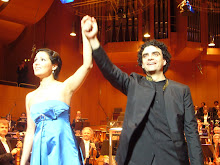
Here are some photos:


For watching all the photos click here (Carlos' blog).


Many, many thanks to Howard for his very detailed and touching review and the great photos !


Here's the "Examiner's" latest review. Click here for reading the article (photos are posted, too)

Dienstag, 23. Juni 2009

"Russian soprano Anna Netrebko lights up opera stage in 'La Traviata'"

Review in the "Canadian press" about Anna's Traviata in San Francisco:

Russian soprano Anna Netrebko lights up opera stage in 'La Traviata'


SAN FRANCISCO — From the moment she rolls on stage in a 1929 Buick for the opening party scene of Verdi's "La Traviata," Anna Netrebko pretty much obliterates everything in her path.

Just try taking your eyes off the Russian soprano as she sings and acts her way through the role of Violetta, a 19th-century Parisian courtesan who falls in love, makes a noble sacrifice and eventually dies of tuberculosis.

Netrebko, at 37, is an opera star at the height of her considerable powers. And her appearance is unquestionably the highlight of the San Francisco Opera's annual "summer season," though the other productions - Puccini's "Tosca" and Gershwin's "Porgy and Bess" - have much to recommend them.

Heard at the third of her five performances Friday night, Netrebko showed she has kept her creamy voice, tinged with melancholy, in good repair. If anything, it sounds fuller than before she took a pregnancy sabbatical last year, yet she controls it so expertly that she has no trouble pulling off the coloratura flights of "Sempre libera" or floating soft high notes in her death scene. She has retained some of the weight she gained but still looks glamorous in costumes that range from a sleeveless evening gown to a negligee.

Netrebko is a San Francisco favorite, having made her U.S. debut here in 1995. But it had been five years since she last sang with the company, so it was a particular plum to have her perform Violetta for the first time in the U.S. (She is due to sing it at New York's Metropolitan Opera in the 2010-11 season.)

Though she has by now portrayed the role dozens of times in other houses, her performance feels spontaneous and free of mannerism. Small, telling touches abound - the way she spits out the word "Gioir!" (Joy!) as she desperately asserts her preference for the high life over a commitment to her young suitor, Alfredo; her nervous impatience when his father first lectures her about the shame she is bringing to his family; or the final image, standing atop her bed with arms outstretched, then crumpling lifeless in an instant.

If only her co-stars were worthier foils. As Alfredo, tenor Charles Castronovo sang pleasantly but neither his personality nor his sound had enough heft to make it plausible that he could be more than a passing fancy for this Violetta. Similarly, baritone Dwayne Croft's burnished baritone was pressed to the limits as Alfredo's father, Giorgio Germont. The effort seemed to narrow his emotional range, denying him the force of character that could believably inspire the heroine's renunciation.

Donald Runnicles, the company's music director and principal conductor who is being replaced after 17 years by Nicola Luisotti, conducted the excellent orchestra with evident affection both for the players and the score.

The production by Marta Domingo, on loan from the Los Angeles Opera, turns Violetta into a flapper of the Roaring '20s. That works well enough in the first act, but makes nonsense of the story thereafter. The idea that she would renounce her lover to protect the reputation of his family doesn't transfer well, nor does the likelihood she would die of tuberculosis.

And though the antique car is an eye-popping effect, other liberties are gratuitous, such as making Alfredo rush back in at the end of "Sempre libera" so the lovers can fall into each other's arms, or having the dying Violetta hallucinate about her wedding day.

Dubious updating, though to less distracting effect, is also on display in "Porgy," which director Francesca Zambello, in a production first seen at the Washington National Opera, has moved from the 1920s to the 1950s. The elaborate set for Catfish Row looks like an odd cross between a shantytown and a prison cell block, but the movable scenery allows the action to flow without interruption.

The breakout performance here is by bass-baritone Eric Owens, who as Porgy commands the stage with a warm, sympathetic voice and presence. Soprano Laquita Mitchell looks terrific as Bess, and sounds fine most of the time, but the high notes occasionally give her problems and her voice lacks the plushness ideal for the role. In supporting roles, soprano Angel Blue is a standout as Clara, with a shimmering "Summertime," and Karen Slack brings emotional fervor to "My Man's Gone Now." John DeMain, who led the historic Houston performances of the work in 1976 that restored "Porgy" as grand opera, conducted with authority gained from long association with the score.

"Tosca," one of the most tightly constructed melodramas in the operatic repertory, requires a soprano with great vocal and dramatic presence. Adrianne Pieczonka is very effective in the role, and her second-act confrontation with the evil Baron Scarpia, well sung and acted by baritone Lado Ataneli, is the chilling climax it should be. Tenor Carlo Ventre, as the painter Cavaradossi, is not quite on their level. He has a powerful voice, but it's blunt and unrefined, and he's prone to holding onto his high notes a bit too long - as if to show off his lung power.

Despite the anemic economy, the company seems to be attracting healthy audiences for this mini-season, which runs from June 2-July 5. All five of Netrebko's performances sold out (the final four will be shared by Elizabeth Futral and Ailyn Perez) as did all performances of "Porgy." "Tosca" drew a crowd of 27,000 to a free simulcast at the Giants' baseball stadium, which the company says is the most since opera-in-the-ballpark became a regular event.


It feels so, so good to read such articles. They are all showing again and again that Anna is really back, that she is even better then before and that nothing has changed ! She's still the same - simply our Anna <3
Sonntag, 21. Juni 2009

Anna Netrebko walks into a bar...

Anna Netrebko walks into a bar...

While sitting at the bar of a restaurant across from the opera house Friday night, I was surprised to see Anna Netrebko and Charles Castronovo casually stroll in after performing in La Traviata (I wasn't at the performance, but was coming from seeing Hiromi Uehara next door- she'll get her own post).

Since I thought the recently published photos of her for the Chron interview were pretty unflattering, I'm happy to report Netrebko still looks great from three feet away (I had another chance close-up sighting of her in Costa Mesa a couple of years ago when I found myself standing next to her and Rolando Villazon). She seemed fine to wait while the restaurant arranged for their party table upstairs. It appeared that many people in the restaurant didn't even recognize her, as the public left her alone and nary a fuss was raised over the opera world's most desired diva- or is it the locals are just too cool to fawn over her?

I resisted the urge to ask to have my picture taken with her, though I'll admit to the temptation. I was really hoping she'd pop down on the empty stool two to my left. So was the guy seated to my left. Alas, both of us were disappointed.


I love such reports about Anna ! They are showing that Anna is in real life really just a normal person and that she has nothing to do with a "diva" or something. She's so kind ! I love her !

Mittwoch, 17. Juni 2009

Many things

Sorry that I didn't wrote anything since Saturday as I had already promised, but I'm ill and the last days I was only lying my bed...There happend a lot...where to begin ??? Hmm...well on Saturday had Anna her first performance of Traviata at the San Francisco Opera. There are some reviews and many, many photos but it would actually need to long to load them up all, cause there are also other things I want to write down...So happend happend, too ?? -> Rolando will not sing Don José in the millenium production of Carmen next year in Vienna with Elina as Carmen and Anna as Micaela ! Click here, here and here. Well of course it's shit for the ones who are having a ticket yet or are trying to get one, but I think it's a good decision he made. The pressure would be soooooooo high if he would sing in this production, the whole world of opera would look (and listen !) at (to) him. If Giordano is a good replace...hmm...we will see...
Maybe I will later also upload some photos of Prague (I really took a lot ^^) It was a great holiday even if we didn't sleep a lot ;)

Dienstag, 9. Juni 2009

Closing, Prague and Anna in San Francisco

I'm sorry for telling you but yes - the blog will be closed till Saturday once again. But now is the reason something much more better then exams ;) I travel with my class to Prague =) I will of course take a lot of pictures and report you on Sunday over the Smetana Hall, the Rudolfinum (where Anna recorded Souvenirs), the national museum, the Dvorák museum etc etc =)

Not to forget -> Latest news about Anna cause of her upcoming performances of La Traviata at the San Francisco opera, click here =)

Hope you will have a nice a week !

See you soon
Yours, Christina

Mittwoch, 6. Mai 2009

Rhodri about Anna's Traviata in Vienna =)

Thanks a lot to Rhodri for his fantastic report !!!!

The Salzburg Traviata. That was my first encounter with Anna Netrebko and ever since I´ve desperately wanted to see her as Violetta. When she was scheduled to sing the role with the ROH in early 2008 I thought I´d struck it lucky but then disaster struck in the form of bronchitis and she cancelled the performance I was due to see, but fortunately Vienna came to the rescue.

Rising at four in the morning has never been my favourite past time but for once I´m glad I made the effort. As a fellow opera goer said to me after the performance had ended - "I could sit through it once again right now." It was that good.

Netrebko gave a performance as compelling, in my admittedly uneducated eyes, as the one she gave in Salzburg. However, this was a diff rent Violetta than the one who had dazzled in red. Gone were the Olympic style gymnastics, instead the Violetta on the stage seemed a far more mature creature, and one already, it appeared to me, to be willing to fore-go her life of Sempre Libera lifestyle.

Maybe it´s a lazy assumption to make but this new found approach to Violetta could be due to the recent changes in her life. Whatever the reason she gave a performance that exuded self awareness and knowledge of the profundity of her situation. The desperation in the final scene was palpable in the audience as the revellers partied almost tauntingly outside her window.

And the rest of the cast?

In order for Traviata to work there has to be three singers of equal abilities and thankfully in the shape of Joesph Calleja and Vladimir Stoyanov the triumvirate was complete.

Calleja (Alfredo), on Monday´s night performance should consider throwing in the odd off colour performance otherwise he will be in danger of singing the role for the remainder of his career. the most pleasing aspect of his performance was how he married the sweet lyrical nature of his voice to a surprisingly powerful engine.

As Giorgio Germont Vladimir Stoyanov accomplished the difficult skill of having to be a man at least twice his age without ever falling foul of the great risk in this role and overstating the character´s age. He allowed the music to guide him and as such he never over sang his role.

As for the Vienna Phil they were simply sublime - from the haunting opening to the final notes of the opera they gave the singers the greatest support imaginable and guided by Marco Armiliato they breathed life into Traviata and brought new aspects of the piece to my ears.

Before I travelled to Vienna I was aware that the city had taken Netrebko to their hearts, but I wasn´t prepared for how much they had done so. As soon as the final curtain fell a huge roar erupted around the house and there followed a ten minute standing ovation. But this was no "love-in" ovation, because I would dare any house in the world not to react in the same way after a performance of great skill and artistry from all concerned...

Dienstag, 5. Mai 2009

Review about Anna's Traviata in Vienna yesterday evening

Traviata charm with a whiff of irritation

Traviata-Charme mit einem Hauch von Irritation

Wien - Reflexartig muss man, wenn man Anna Netrebko in La traviata sieht, auch an die Salzburger Glanzproduktion (2005) denken; und sieht man sie als Violetta an der Staatsoper, muss man die Sopranistin somit auch bedauern und bewundern: Ersteres, da ihre in Salzburg erarbeiteten Spielkünste in der Inszenierung (nach Otto Schenk) verloren wirken; Letzteres, da Netrebko doch Kraft hat, sich von einer Wiener Verdi-Stehpartie nicht anstecken zu lassen.

Auch im Vokalen gibt es noch zureichende Gründe der Bewunderung: Als Violetta scheut sie kein Pianissimo-Risiko, keine Zerbrechlichkeit. Und nach wie vor entfaltet ihr Sopran in der Höhe dunkle Fülle. An sich selbst gemessen ist die Netrebko an diesem Abend indes etwas unter ihren Möglichkeiten geblieben. In einer leisen Passage brach ihr im ersten Akt für einen kurzen Augenblick die Stimme weg. Und manch einen Ton, ansonsten punktgenau ohne Anlauf getroffen, steuerte sie diesmal mit kleinen Glissandi an - als wäre da ein winziger Zweifel bezüglich der Treffsicherheit.

Um sie herum solide Qualität: Joseph Calleja (als Alfredo) bezirzte durch Schönklang, bekam aber im Finale leichte stimmkonditionelle Probleme; konstanter in puncto Qualität Vladimir Stoyanov (als Germont). Das Orchester unter Marco Armiliato bliebt unauffällig, aber galant.


Thanks to Schlumpf for the info ;)

Montag, 4. Mai 2009

Anna Netrebko sings in Vienna

Anna Netrebko singt in Wien

Anna Netrebko singt ab dem 4.5. an der Wiener Staatsoper die Violetta in „La Traviata“.

Jenen Mann, der auf der Bühne ihr Schwiegervater werden sollte, bringt sie gleich aus Zürich mit: Anna Netrebko kommt wieder an die Wiener Staatsoper und singt ab dem 4.5. dreimal die Violetta in Verdis La Traviata. Mit dieser ihrer Glanzrolle hat sie im April auch am Opernhaus Zürich debütiert. Dort wie hier in Wien singt der bulgarische Bariton Vladimir Stoyanov (40) den Vater ihres Bühnen-Liebhabers Alfred Germont. Dass dieser Vater die Liaison seines Sohnes ablehnt, beschleunigt das letale Ende der Oper.

Schiffstaufe in Hamburg
Ein arbeitsreicher Mai für die junge Mutter: Anna Netrebko wird nach den Wiener La Traviata-Vorstellungen am 4., 7. und 11. Mai, bei denen der maltesische Tenor Joseph Calleja den Alfred singt, in Hamburg am 15. Mai bei einer Schiffstaufe mitwirken. Die Agentur TUI Cruises nimmt den Kreuzfahrt-Luxusliner Mein Schiff in Betrieb. Die Netrebko singt dort am Hamburger Fischmarkt die Hymne Ocean of Love, eigens dafür komponiert. Auch Udo Lindenberg ist bei dem hanseatischen Event mit dabei. Das Publikum kann „in 44 schwimmenden Logen auf der Elbe“ den Stars möglichst nahe sein.

London
Gleich nachher gibt die Netrebko zwei Konzerte in der Braunschweiger VW-Halle und in der Londoner Royal Festival Hall, dann folgen in München drei Opernauftritte als Mimi in Puccinis Boheme, wieder mit Calleja als Partner.

Erst 2010 wieder in Wien
In Wien ist die Netrebko erst wieder im Frühjahr 2010 zu sehen und hören. An der Staatsoper singt sie zum Ende der „Ära Holender“ ein Dutzend Vorstellungen: Mimi, Manon, Elvira (Bellinis I Puritani) und Micaela (Carmen).

„La Traviata“. Mit Anna Netrebko. Am 4.Mai, 19 Uhr,

Sonntag, 3. Mai 2009

Here is Anna Netrebko showing us her baby

Hier zeigt uns Anna Netrebko ihr Baby

Wir sehen in die Augen einer strahlenden Familie. Mit Erwin Schrott und dem gemeinsamen Sohn Tiago Arua hat Anna Netrebko ihr Glück gefunden. Morgen kehrt die Diva an die Wiener Staatsoper zurück. In ihrer Paraderolle, der Violetta aus La Traviata.

Sieben Monate ist er schon alt und ein pfundiges Kerlchen: Tiago Arua (der Name bedeutet „friedlicher Jakob“), Sohn der meistumjubelten Sopranistin der Welt, Anna Netrebko (37), hat seit der Geburt ordentlich zugelegt! Beweisbilder wurden jetzt in Zürich geschossen: Reizende Aufnahmen - die ganze Jungfamilie inklusive Papa Erwin Schrott (36), Bassbariton aus Uruguay, beim Shopping.

Shopping-Bummel
La Netrebko, die zuvor in ihrer Paraderolle der Violetta aus La Traviata am Züricher Opernhaus geglänzt hatte (und das mit Sicherheit auch morgen an der Wiener Staatsoper tun wird!), wollte sich diesmal bei einem Einkaufsbummel in der berühmten Zürcher Bahnhofsstraße selbst belohnen. Zuerst ging es zum Nobel-Juwelier Chopard – eine Pflichtvisite, immerhin werkt Anna als Chopard-Botschafterin – anschließend zog es die Sopranistin in den berühmten Züricher Shopping-Tempel Grieder.

Nuckel-Phase
Unterdessen hatte Papa Erwin anderes im Sinn: Er erstand für seine Anna einen Strauß purpurfarbener Rosen. Jedenfalls eine willkommene Ablenkung für Tiago, den der Rosenbund schon bald viel mehr interessieren sollte, als alles rundherum. Der Kleine befindet sich momentan sichtlich in der oralen Phase, wollte sich den verheißungsvollen Rosenstrauß sofort in den Mund stecken. Papa Erwin bestätigte seufzend: „Momentan nuckelt er wirklich an allem herum, was er in die Hände kriegt!“

Keine Nanny
Und die berühmte Mama erklärte lachend: „Ich habe großes Glück mit meinem kleinen Prinzen. Er ist immer fröhlich und zufrieden. Er ist unglaublich pflegeleicht, schreit nur, wenn er Hunger hat!“ Und weil das so ist, verzichtete die Kleinfamilie in Zürich sogar auf eine Nanny. La Netrebko hat nämlich nicht nur ihr Publikum, sondern auch den Kleinen fest im Griff. Als Tiago kurz zu quengeln begann, war Anna La Mamma sofort zur Stelle, um den Buben in ihren Armen zu wiegen. Der Kleine beruhigte sich daraufhin sofort, gluckste zufrieden. Von uns bekommt Anna mit Sicherheit nicht nur beim morgigen Auftritt in der Wiener Staatsoper Standing Ovations, sondern auch in dieser, ihrer wohl schönsten Rolle?

Freitag, 24. April 2009

The "soprano model" came - and was even better than expected

Das «Sopranmodel» kam – und war noch besser als erwartet

Die Diva kann singen! Anna Netrebko gab am Dienstag mit der «Traviata» ihr wunderbares Zürcher Operndebüt.


In den vergangenen Tagen stieg die Temperatur um das Zürcher Opernhaus herum sprungartig an. In den CD-Geschäften fiel immer öfter ihr Name, durch die Medienlandschaft ging ein Raunen, die NZZ zählte die Nächte. Und dann war sie da: Anna Netrebko, Opernstar, «Sopranmodel» oder ganz einfach, die zurzeit bekannteste klassische Sängerin der Welt. Sie war da, und sie war ein wenig anders als erwartet. Gegeben wurde Giuseppe Verdis «Traviata» in der laufenden Inszenierung von Jürgen Flimm mit dem Orchester der Oper (Leitung Marco Armiliato) und dem Gesangsensemble des Hauses. Und dass Anna Netrebko an diesem Abend wohl die einzige Person im gesamten Opernhaus war, der es mehr um die Traviata ging als um die Netrebko, dafür schloss man sie bereits ins Herz.

Die melodramatisch-anrührende Geschichte der Kurtisane Violetta beginnt im glamourösen Paris. Jung ist Violetta, schön und schwindsüchtig. In der ihr verbleibenden Zeit will sie sämtliche Genüsse des Lebens auskosten. Am liebsten tut sie das in ihrem Salon, wo soupiert, getanzt und angebandelt wird und wo sie schillernder Mittelpunkt des Geschehens ist. Eine ideale Kulisse – so denkt man – für den gross inszenierten Auftritt einer jeglichen Operndiva. Auf Récamieren hingegossen, könnte man da singen, wohlgeformt Körperteile in extravaganten Kostümen spazieren führen und sämtliche Allüren in einer einzigen Szene unterbringen.
Doch nichts dergleichen geschah. Anna Netrebkos Violetta ist nachdenklich, beinahe verletzlich schon. Zwar steht sie mitten im Geschehen, aber im Grund genommen noch viel mehr daneben. Und wenn sie trotzdem mal mitsamt dem koketten Blick gleich auch noch das Champagnerglas über die Schulter wirft, so ist das mehr kompensierend exaltierte Geste als überhitzte Ausgelassenheit.

Violettas liebliche Schönheit

Die Sängerin überraschte auch musikalisch. Unerwartet innig bis fragil klangen ihre Phrasen – wohl ganz im Sinne Verdis, dem es darum zu tun war, in seiner Musik statt grossartiger Aktion die seelische Innenwelt der Figuren darzustellen. Was die akustische Nachahmung der Krankheitssymptome anging (die sich der Komponist ausdrücklich verbeten hat), zeigte sich Netrebko ebenfalls undivenhaft stilsicher. Nie liess sie bühnenwirksam naturalistische Huster oder gar ein Röcheln hören.

Und: Anna Netrebko kann singen. Und wie! Von verblüffender Akkuratesse ist ihre Technik, und ihre Stimme behielt stets die ihr eigene, samtene Qualität, ob in den höchsten Tönen oder dem tiefsten Register. Das warme Timbre sowie geschmackvoll eingesetzte Portamenti verliehen den Gesangslinien liebliche Schönheit. Alles andere als eine singende Urgewalt bot sich dem Publikum, und geschmettert wurde erst recht nicht. Ausser ein bisschen vom jugendlich-ungestümen Alfredo, der in unsterblicher Liebe zu Violetta entflammt. Aber Piotr Beczala tat dies mit so unschuldigem Charme, dass man es ihm schlicht nicht übelnehmen mochte.

Alfredos Zuneigung

Alfredo vermag mit seiner aufrichtigen Liebe Violettas Herz zu erobern. Zum ersten Mal wird sie nicht bloss begehrt, sondern erfährt wahre Zuneigung. In trauter Zweisamkeit verbringen die beiden Liebenden den Sommer auf dem Land. Dass dieses Idyll jedoch nicht von Dauer sein kann, gehört zur Grundlage jeder Operndramaturgie. Und schon taucht Alfredos Vater auf und drängt Violetta, seinen Sohn zu verlassen. Lenke sie nicht ein, würde dieser mitsamt seiner Schwester aus der Gesellschaft ausgestossen. Wie Anna Netrebko da im Duett ihre Einsätze mit grösster Behutsamkeit in den Part des Vater Germont (Juan Pons) einflocht, zeigte vollends, dass sie sich keineswegs als solitäres Goldkehlchen, sondern viel mehr als kammermusikalisch sensible Sängerin verstanden haben will.

Annas Mut

Violetta setzt schliesslich alles aufs Spiel: Für die wahre Liebe will sie auf ihr persönliches Wohl verzichten und hofft, dass ihr Opfer einst seine gerechte Belohnung finde. Und auch Anna Netrebko sang ohne Sicherheitsnetz: Statt die musikalische Gestaltung auf der sicheren Seite zu behalten, riskierte sie vom leisesten Pianissimo bis zu halsbrecherisch heiklen Einsätzen alles und nahm durchaus in Kauf, dass sie sich damit auch Blössen gab.

Für Violetta zahlt sich der Mut nicht aus. Der Schmerz verschlimmert ihre Krankheit. Zu spät lenken Alfredo und sein Vater ein, und so stirbt sie in den Armen des Geliebten. Anders bei Anna Netrebko: Durch ihren Mut gelang ihr eine Interpretation, deren persönliche Färbung weit über die sogenannte Authentizität bunt bebilderter Homestorys und Exklusiv-Interviews hinauswies. Die Sängerin bot damit überraschenderweise kein Hochglanz-Grossereignis, aber musikalisch ein grosses Ereignis.

Donnerstag, 23. April 2009

Another review

Entdeckung einer Künstlerin

Anna Netrebko in Verdis «Traviata» am Zürcher Opernhaus

Erwartet worden war ein Star, gekommen ist eine Künstlerin. Wie anders hat sich die gefeierte russische Sopranistin Anna Netrebko bei ihrem Début im Opernhaus präsentiert als bei ihrem ersten Zürcher Auftritt vor dreieinhalb Jahren im Hallenstadion! Damals die riesigen Plakatwände und flächendeckenden Medienauftritte zusammen mit dem Tenor Rolando Villazón, jetzt der der Name Netrebko ohne jede Hervorhebung in Spielplan und Wocheninserat des Opernhauses. Hätte sich in der ersten der drei Vorstellungen nicht die Sponsorfirma aus der Uhren- und Schmuckbranche unübersehbar in Szene gesetzt, wäre es fast ein ganz normaler Abend gewesen – bis Anna Netrebko als Kurtisane Violetta Valéry auf der bugartigen Plattform hoch über der Festgesellschaft im Pariser Salon die Bühne betrat.

Schon als sie noch mit dem Rücken zum Publikum stand, war ihre körperliche Präsenz mit Händen zu greifen. Dabei passte sich Anna Netrebko durchaus der stilisierten, sachlich kühlen Inszenierung Jürgen Flimms an (umso naturalistischer klangen die Hustenanfälle der Schwindsüchtigen). Die Kostüme wurden zwar für sie neu angefertigt und modifiziert, doch sie sind diskret, ja schlicht geblieben. Tatsächlich hat es die Sängerin nicht nötig, Bein und Busen zu zeigen, und wer glaubte, sie verdanke ihre kometenhafte Karriere wesentlich ihrem schönen Körper, der wurde gerade bei diesem Zürcher Gastspiel eines Besseren belehrt. Natürlich trägt die gespannte Ausdruckskraft, die sie jeder Geste, jeder Bewegung verleiht, viel zur Faszination ihrer Traviata-Interpretation bei. Doch in erster Linie ist diese Künstlerin – so, wie sie hier in Verdis Oper auftrat – ein Stimmphänomen. Dabei gründet ihr Ausnahmerang heute vielleicht weniger auf dem Timbre ihres Soprans, so sinnlich und reizvoll dieses dank seiner natürlichen dunklen Färbung klingt, als vielmehr auf dem aufs Äusserste verfeinerten, doch nie manieriert wirkenden Umgang mit den vokalen Mitteln.

Wie sie dem Klang Resonanz verschafft, den Ton fokussiert, auf dass er auch im Piano trägt, vor allem aber wie sie die Kunst des Crescendos und Decrescendos einsetzt, das zeugt von wahrhafter, reifer künstlerischer Meisterschaft. Und sie beschränkt sich nicht auf die virtuose Wiedergabe von Phrasen oder Arien, sondern gestaltet stets das Ganze einer Szene, eines Aktes, nein: der Figur in allen Facetten von Liebesglück, Verzicht, Krankheit, Verlassenheit und utopischer Hoffnung im Tod. Am eindrücklichsten konnte man das im zweiten Akt erleben, bei der Konfrontation mit Alfredos Vater und der verzweifelten Flucht zurück in die Pariser Halbwelt. Ein Jammer, dass Juan Pons hier mit seinem in der Höhe belegt klingenden Bariton und seiner statischen Darstellung Netrebko kein künstlerisches Gegenüber sein konnte.

Umso beglückender war die Partnerschaft mit Piotr Beczala in der Rolle Alfredos. Der polnische Tenor, mit seiner langsamen, kontinuierlichen Entwicklung das genaue Gegenbild zum Senkrechtstarter Villazón, steht heute auf dem Zenit seiner stimmlichen Entfaltung und verströmt eine solche Fülle an Schmelz und Glanz, dass man darüber vergisst, dass sein Gesang weit leidenschaftlicher ist als seine Darstellung. Für einen geschlossenen Gesamteindruck sorgte nebst dem motivierten Hausensemble auch der Dirigent Marco Armiliato, der das hellwache Orchester mit sensibler Hand führte und zugleich eine optimale Abstimmung mit den Sängerstimmen erzielte. – Wer das «Ereignis Netrebko» noch vor sich hat, darf sich freuen!

Anna rocked the house !!!

Auch Marcel Ospel liess sich von Anna Netrebko betören

Der heiss erwartete Gala-Auftritt des Starsoprans Anna Netrebko geriet zu einer Sternstunde für das Opernhaus. Gerade weil die Diva sich gar nicht als Diva gab.


Darauf freute sich selbst die Opernkritikerin der NZZ wie auf Weihnachten: «Noch vier Mal schlafen» rechnete sie ihren Lesern vor. Über 5200 Opernfans hatten Karten bestellt, um die russische Sopranistin Anna Netrebko zum ersten Mal im Opernhaus Zürich singen zu sehen. 3000 von ihnen gingen leer aus: Die Karten für Giuseppe Verdis «Traviata» waren vom Fleck weg ausverkauft. Gestern war die erste von drei Vorstellungen im Opernhaus. Und haben sich die Galapreise von bis zu 380 Franken pro Platz gelohnt?

Als schwindsüchtige Kurtisane Violetta Valéry war Netrebko erstaunlich undivenhaft, eher einfaches Mädchen als extravagante Lebefrau. Sie sang mit überraschender Innerlichkeit, makelloser Technik und wunderbar warmem Timbre. Die Diva feierte überhaupt nicht sich selber als Star, sondern passte sich ins Ensemble ein, gerade auch bei den Duetten mit Piotr Beczala als Alfredo. Das Publikum dankte es dem 37-jährigen Star vor der Pause mit überaus herzlichem Applaus - aber nicht mit frenetischen Beifallsstürmen und überzogenen «Bravos!». Zu sehr hatten sich die Zuschauer von Netrebko, dem Ensemble und dem Orchester unter Marco Armiliato ins Schicksal Violettas hineinziehen lassen.

Prominente im Publikum

Das Publikum war nach den Worten von Opern-Habituée Hildegard Schwaninger nicht das übliche Opernpublikum, sondern eine Mischung «aus den üblichen Premieren- und Opernball-Gästen.» Karl Scheuble, millionenschwerer Senior-Chef des Schmuckhauses Chopard und Sponsor des Abends, war aus Genf angereist und lud nach der Aufführung zum Cocktail mit Netrebko, die sonst während ihres Zürcher Aufenthalts von Opern-Intendant Alexander Pereira abgeschottet wird wie das Gold in Fort Knox (fotografieren nicht erlaubt). Unternehmer Beat Curti liess sich den Abend ausserhalb seines Abonnements nicht entgehen. Finanzdirektorin Ursula Gut belegte die Regierungsloge, aber der Stadtzürcher Polizeichef Philipp Hotzenköcherle hatte Billette in der teuersten Kategorie ergattern müssen. Und eilenden Schrittes, aber offenbar glänzend gelaunt, war Ex-UBS-Chef Marcel Ospel durch die Eingangstür marschiert.


Click here for watching a short video clip of one Traviata rehearsal with Anna and Piotr =)

Mittwoch, 22. April 2009

Translation - Part 5 (Finally the last part ^^)

Since Friday in Zürich

Netrebko is since Friday with her fiancé and her seven month old child in Zürich, on Saturday had she her first rehearsal with the opera house orchestra. She takes in Jürgen Flimm's "Traviata" staging the role of Violetta, according to custom at resumptions is the stage director himself not attendant, the production results from the assistant director. The "Traviata" performances with Netrebko in Zürich where already sold-out, before the actual advance sale started. Houndreds of orders had to be declined - despite of the for the opera house highest possible ticket prices till 380 Franken per seat. The three performances are shared over a whole week. So Netrebko would have the time for acting out the her rumored shopping passion at the Bahnhofsstrasse.

Translation - Part 4

Particularly in the german-speaking feuilleton you can read many criticism, too, however hardly about her person, but as regards her commercialisation. So wrote the FAZ recently of a "perfect opera-disney-land", that the classik-marketing strategists built around her. The NZZ meant after Netrebko's Hallenstadion performence 2005: "The phenomenon Netrebko/Villazón shows the addiction to prominence, but stands above all for the thinking in the quantity class': The higher the number, the better. This wouldn't be bad, wouldn't it affect explicit the art's existence."

Translation - Part 3

"Knows the diva-compendium bad"

That Netrebko don't want a special treat seems credent. "For somebody, who gets such a medial attention, knows Netrebko the diva-compendium pleasant bad", writes the "New York Times". "She takes despite of her powerfull personality not the whole air in a room for herself, she doesn't speak about herself in the 3rd person, if she talks about her voice, she isn't doing it in an exorbitant reverential sound. Actually she stayed astonishing on earth for a beautiful, world-famous woman." Most of the people who met her already, are talking about a totally normal, most friendly woman, but who can also react very impulsive and sometimes swear.

Translation - Part 2

The diva - a magical labelling, which delivers copious nutrition for the fantasy. And so you wonder: Which demands makes such a women, if she comes to a new house ? Does she demand an personal fitness studio like Mick Jagger ? Or perhaps a bathtub full of rose petals ? "Nothing like this", so the opera houses' answer. "Netrebko is not treated different than any other star here in the house", says spokesman Nadia Stefanizzi. There's nothing to be experienced of other opera house staff. Just this: The whole house is looking forward excitedly to the soprano's three performances, there's high potential.